
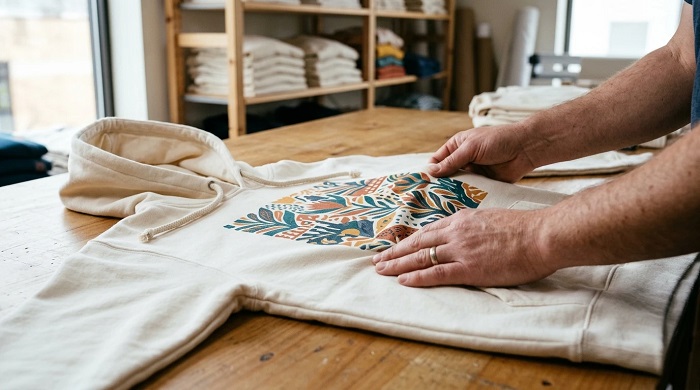
When garment decorators and retail apparel brands compare direct-to-garment (DTG) printing against film-based heat transfers for cotton hoodies and T-shirts, the deciding factor for high-margin retail lines is almost always hand-feel and fabric breathability. While film transfers bond an external polymer adhesive layer across the top of the garment, water-based DTG pigment ink penetrates and cures directly around the cellulose fibres of cotton yarn.
Understanding the mechanical difference between fibre-integrated ink and surface-laminated film helps print shop owners select the right equipment for premium casualwear, loungewear, and sensitive-skin cotton lines—while avoiding common production errors that make DTG prints feel stiffer than they should.
Why Does DTG Deliver a Softer Hand-Feel on High-Cotton Garments?
Direct-to-garment printing achieves a noticeably softer, more breathable finish on 100% cotton and high-cotton blends because water-based pigment inks leave open micro-pores between individual knit loops instead of sealing the fabric under a continuous plastic film. When a customer wears a sweatshirt or heavyweight T-shirt decorated with a large chest graphic, a continuous polymer transfer patch traps body heat and perspiration behind the design, creating the familiar “sweat-patch” stiffness that limits retail pricing.
In a properly calibrated DTG workflow, the ink layer flexes naturally with the jersey knit. However, that soft retail feel is not automatic—it depends on how the operator manages pre-treatment chemistry, white underbase density, and curing airflow:
- Light and unbleached cotton without heavy white underbase: When printing dark or mid-tone CMYK graphics onto white or natural ecru cotton without an opaque white flood coat, water-based DTG ink adds almost zero perceptible thickness to the fabric after heat curing.
- Dark cotton requiring a white underbase: Dark garments require a pre-treatment solution and a white titanium-dioxide ink layer beneath the colour pass. Keeping that print soft requires tailoring white ink percentage to the garment shade and knocking out dark background pixels in the artwork rather than printing a solid white rectangle.
- Pre-treatment application control: Applying excessive pre-treatment fluid leaves a stiff chemical residue around the graphic box, whereas matching spray volume precisely to fabric weight (GSM) keeps the cured print pliable after its first wash.
Remember that whether a white or pastel garment needs pre-treatment depends on the specific ink chemistry, fabric finish, and wash-fastness target; operators should always test a sample blank rather than assuming light fabrics universally skip pre-treatment.
Comparing DTG Printing and Film Heat Transfers Across Production Metrics
Print shops evaluating where DTG fits alongside film-based heat transfers should compare the two processes across substrate compatibility, tactile feel, and artwork preparation rather than treating one machine as a universal replacement for the other.
| Evaluation Dimension | Commercial DTG Printing (Water-Based Pigment) | Film-Based Heat Transfer (Plastisol / DTF Film) | Best Commercial Decision Rule |
|---|---|---|---|
| Hand-feel on large graphics | Soft, matte, and flexible when white underbase and knockouts are optimised | Noticeable surface layer over large solid areas; requires halftoning to reduce stiffness | Use DTG for premium retail cotton tees, hoodies, and loungewear where tactile softness drives repeat orders |
| Breathability & drape | Preserves natural knit airflow across the chest and back | Continuous adhesive film blocks airflow beneath un-rasterised graphics | Choose DTG for oversized chest or back artwork on everyday cotton garments |
| Fine gradients & tonal transitions | Smooth photographic vignettes that fade directly into the cotton weave | Requires hard pixel edges or halftone dots sturdy enough to hold adhesive powder | Prefer DTG for watercolour illustrations, soft drop shadows, and vintage fades |
| Optimal fabric composition | 100% combed ring-spun cotton and high-cotton blends (typically 80%+ cotton) | Polyester performance wear, nylon jackets, poly-cotton workwear, and low-cotton blends | Route high-cotton fashion and casualwear to DTG; keep synthetic and coated outerwear on film transfer lines |
How Operators Prevent Stiff Underbases and Premature Wash Fading
Even on a commercial DTG line, poor RIP settings or rushed curing can compromise both hand-feel and domestic wash durability. When a print shop receives complaints about rough texture or early fading on dark cotton garments, the root cause almost always traces back to three controllable shop-floor variables.
First, examine yarn quality and pre-press smoothing. Loose, uncombed carded cotton has protruding surface fibrils that poke through the wet ink layer during printing. Pressing the blank for a few seconds before pre-treatment and again after pre-treatment drying locks those stray fibres flat against the knit, allowing a thinner white underbase to achieve full opacity without a heavy ink build-up.
Second, adjust RIP white-choke and highlight settings by fabric weight. A 380 GSM fleece hoodie absorbs pre-treatment differently than a 180 GSM combed jersey T-shirt. Saving separate RIP profiles for lightweight tees and heavyweight fleece prevents operators from over-flooding lighter shirts with the high white-ink limits meant for thick fleece.
Third, verify complete water evaporation during curing. Water-based DTG ink and pre-treatment cross-link only after moisture has fully escaped the cotton fibres. Using a conveyor tunnel dryer with active airflow—or hovering a heat press briefly before final contact—prevents steam from staying trapped inside the print layer, which is the primary technical cause of post-wash cracking.
Selecting Commercial DTG Hardware for Consistent Retail Apparel Production
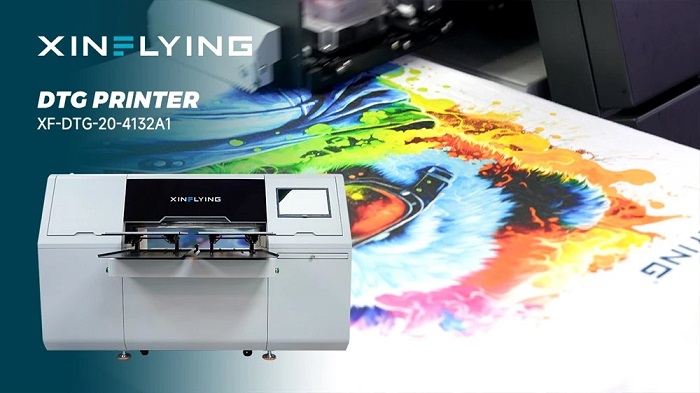
For apparel decorators and garment manufacturers scaling up their cotton production, hardware stability—particularly white-ink circulation, head-height adjustment across thin tees and thick hoodies, and multi-head output—directly determines daily unit cost. Production managers comparing industrial platforms such as the XINFLYING XF-DTG-20 (including the multi-head XF-DTG-20-4I32A1 dual-platen configuration) can review the full range of XINFLYING commercial DTG garment printers to match printhead architecture and platen layout to their daily order mix.
An industrial DTG system equipped with automated white-ink agitation and precision platen height control lets operators maintain the thin, even ink deposition required for retail-grade softness shift after shift. By pairing high-cotton ring-spun blanks with garment-knockout RIP profiles and verified airflow curing, print shops can consistently deliver the breathable, no-plastic hand-feel that premium apparel buyers demand.