
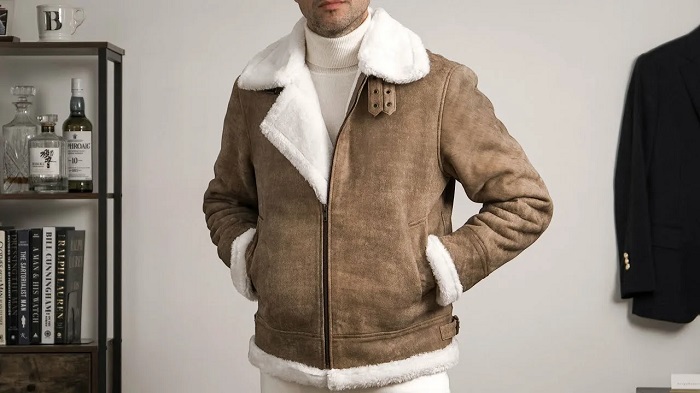
Most men choose a winter jacket by one number: how much down is inside. Yet some of the warmest jackets in luxury menswear contain no down at all. They are built from two natural materials working together: supple leather on the outside and cashmere on the inside.
The idea is simple. Leather blocks wind and light moisture. Cashmere traps warm air close to the body. Together they create a jacket that is thin enough to wear over a knit, warm enough for a city winter, and smart enough to wear with tailored trousers.
Why leather and cashmere work so well together
Wind is what makes cold air feel colder. A wool coat, however thick, lets some air through its weave. Leather is a dense hide with almost no air flow, so it stops wind chill at the surface.
Leather alone is not warm, though. A thin leather jacket in January feels like a cold shell against your shirt. That is where the lining matters. Cashmere fibres are fine and crimped, so they hold a lot of still air for their weight. Lined with cashmere, a leather jacket keeps the body’s heat in while the leather keeps the wind out.
There is a comfort benefit too. Cashmere is soft against the neck and wrists, the places where a polyester lining feels clammy. It also breathes, so you do not overheat when you step inside a warm shop or a train.
Not all leathers are equal
The hide decides how the jacket looks, feels and ages. The three you will meet most often in luxury outerwear:
- Lambskin. Very soft and light, with a smooth finish. It is the most delicate of the three and marks more easily.
- Goatskin. Slightly firmer, with a fine natural grain. It is strong for its weight and copes well with daily wear.
- Deerskin. Thick yet surprisingly soft, with a loose, almost suede-like hand. It stays supple in the cold and moulds to the body over time.
For a jacket you will wear every day through winter, goatskin and deerskin are the practical choices. Lambskin is beautiful, but better suited to milder days and careful owners.
What makes the difference in a well-made jacket
Two jackets can both say “leather with cashmere lining” and still be worlds apart. Check these details before you buy:
- The lining percentage. “Cashmere blend” can mean a small share of cashmere. Look for 100% cashmere in the body lining.
- Thickness of the hide. Too thin and the jacket wrinkles and tears; too thick and it feels stiff. A good maker selects hides for an even thickness across the panels.
- The collar and cuffs. Ribbed knit collars and cuffs seal in warmth better than an open leather collar.
- Zips and hardware. A two-way zip lets you sit comfortably in a car. Metal zips should run smoothly without catching the leather.
- Where it was made. Leather tailoring is a craft. Workshops with generations of experience still make a visible difference.
A family that has worked leather for over a century
The Italian house of Mandelli is a good example of how long this craft takes to master. The family started out supplying leather to shoemakers’ workshops in northern Italy. Over the following decades it moved into leather clothing, and its men’s motorcycle jackets became a signature. Today the company is run by the fourth generation of the family, and everything is still made in Italy.
What stands out in its current collections is exactly the pairing described above: goat leather and deer leather jackets and quilted vests, lined in cashmere and finished with ribbed stand collars. They are designed to be worn over a fine knit rather than a bulky sweater, which keeps the silhouette clean.
How to wear a cashmere-lined leather jacket
Because the jacket is warm but slim, it works across more of your week than a puffer does:
- Weekend: over a cashmere crewneck with dark jeans and suede boots.
- Smart casual: over a fine-knit polo or roll-neck with wool trousers and loafers.
- Deep winter: as a mid-layer under a long wool overcoat, where a quilted leather vest does the job well.
Keep the colours simple. Black, navy and dark brown leather pair with almost anything. A rust or tan jacket is a strong piece, so let it be the only bold item in the outfit.
Caring for leather and cashmere
A good jacket of this kind should last for decades if you treat it well:
- Hang it on a wide, shaped hanger so the shoulders keep their form.
- Let it dry naturally at room temperature if it gets wet. Never put it near a radiator.
- Wipe off road salt with a damp cloth as soon as you get home.
- Condition the leather once or twice a season with a product made for that hide.
- Store it in a breathable cotton cover, never in plastic, and add cedar to protect the cashmere from moths.
- Take it to a leather specialist for cleaning. The lining and the hide need different care, so it should never go in a washing machine.
The bottom line
Down jackets win on pure warmth per gram. But for city winters, where you walk between buildings, drive and spend much of the day indoors, a leather jacket lined with cashmere is often the smarter choice. It blocks the wind, breathes indoors, looks right with tailoring and, made well, improves with every year you wear it.